
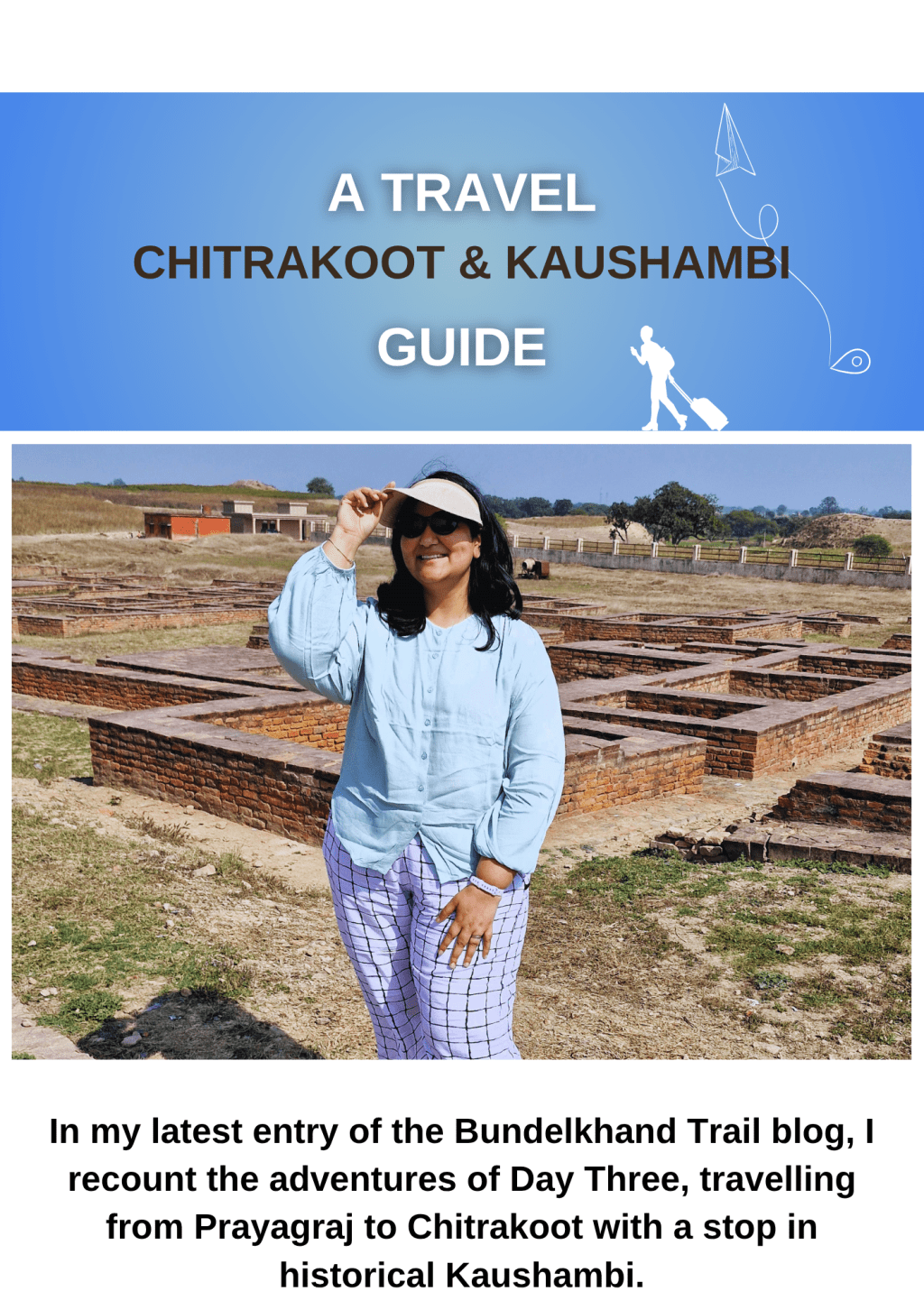
Did you read the Day Two of the Bundelkhand Trail blog post? If not, you can do so here. The experiences were overwhelming. I didn’t think a single post would do justice to that whole road trip. Bear with me as I break down each day for you.
It is time for Day Three of the Trail – moving from Prayagraj to Chitrakoot with a halt at Kaushambi. The Deep Dive India itinerary was delivering on its promise of adventure. My Day Three began with a walk around the Planter’s Bungalow, clicking photos of the resident owls and the vintage cars, and chatting with Amresh P Singh sir for almost an hour about, of course, travel.
I promised to return with family.
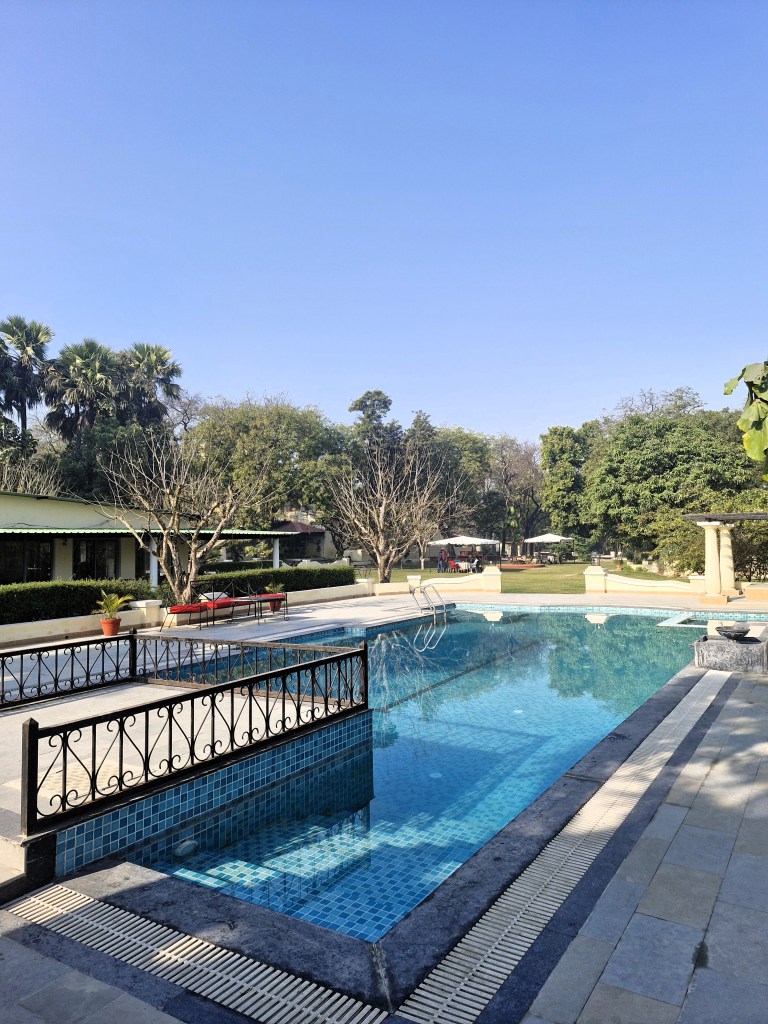
Swimming Pool at Planters’ Bungalow
We bid adieu to Amresh Singh sir and to Planters’ Bungalow after a round of group photos. We then headed out towards Kaushambi. On our way, our Kaushambi guide, Adarsh Malviya, and Samir Kher told us about the mahajanapadas and the importance of Kaushambi in the 500 BCE era.
After a 1.5 hours’ journey, we were at this ASI excavated town.
Kaushambi
In the 6th century BCE, Kaushambi was one of the six most important and prosperous towns of India. Adarsh informed us that it was the capital of the Chedi Vatsa Maha Janapada. According to the Puranas, Nichakshu transferred his capital from Histanapur to here.
ASI Excavations at Kaushambi
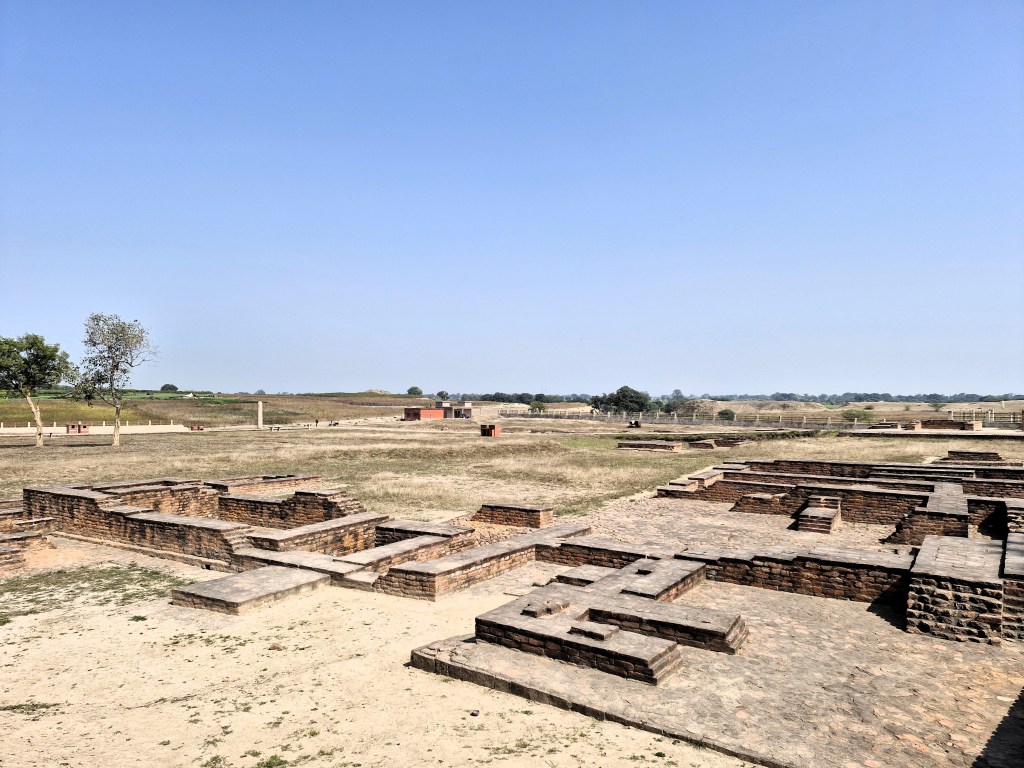
Kaushambi was a great trade centre. It was on the way of the principal route from north to south and east to west. It was a crucial city during the Maurya, Shunga, Kushan and Gupta periods. It is situated on the left bank of the River Yamuna.
Gautam Buddha visited Kaushambi several times during the ruling of Udayana. In the residential areas, there were continuous settlements from the middle of the 4th century BCE to the early 4th century CE. But, its antiquity, including the fortification, can be dated back to the 1st millennium BCE.
The excavated remains of Kaushambi were first recognized by A Cunningham as an ancient town. It is a significant Buddhist pilgrimage site. In fact, when we were there, a group of Buddhist pilgrims were offering prayers at the Monolithic Ashokan Pillar site.
Kaushambi reminded me strongly of Sarnath. You can read my Sarnath blog post here.
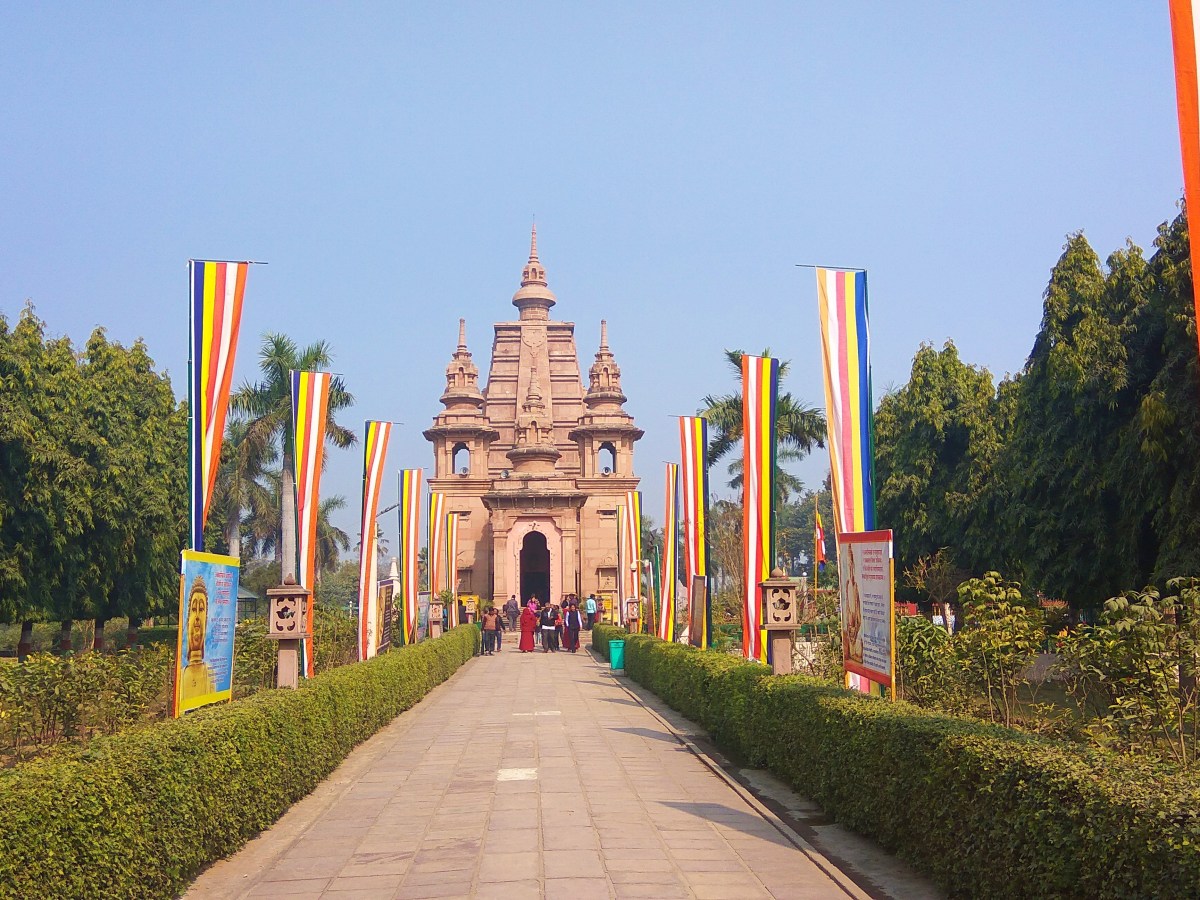
Buddham Saranam Gacchami
A half-day excursion to Sarnath “Buddham Saranam Gacchami. Dhammam Saranam Gacchami. Sangham Saranam Gacchami.” (“I go to the Buddha for refuge. I go to the Dhamma for refuge. I go to the Sangha for refuge.”) We have been drawn towards Buddhism for a long time now. As we visited places like Bhutan, Ladakh & Spiti, we came to know more about Gautama Buddha & His teachings. Siddhartha by Herman Hesse further increased our fascination. In a world of extremes, we…
Keep reading
Also, while winter is the right time to visit Kaushambi, please try to go in the morning or the evening hours. With no shade anywhere, the afternoon Sun, even in February, was quite harsh.
Monolithic Ashokan Pillar
Our first stop in Kaushambi was the Monolithic Ashokan Pillar. Adarsh informed us that the Mauryan emperor, Ashoka the Great, erected two inscribed stone pillars in residential areas. These are masterpieces of Mauryan art featuring high – polish sandstone.
One Monolithic Ashokan Pillar contained one of his major edicts. He warned the monks against schism in the Sangha. The other pillar was moved to the Prayagraj Fort during the Mughal period. Both the pillars do not have capitals.
The Monolithic Ashokan Pillar
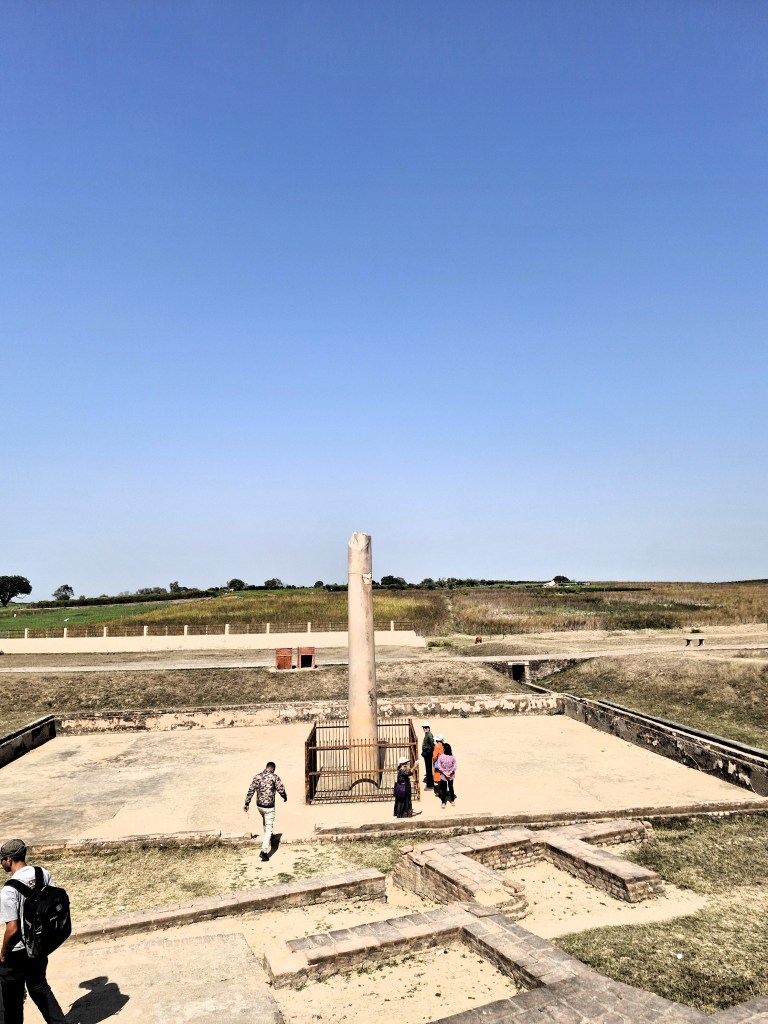
The Sun was beating down on us as we made our way through the excavated site to get to the Monolithic Ashokan Pillar. There wasn’t a spot of shade anywhere. We saw the layout of the town around us though, of course, it was difficult to visualize how it would have looked in those days.
The base of the Monolithic Ashokan Pillar was enclosed in an iron grill. And we could see why – because, before the ASI took over, locals had already begun to deface it.
Ghoshitaram Monastery
Gautam Buddha visited Kaushambi several times in his effort to spread the dharma. Buddhism found a strong hold here through the efforts of three leading bankers of the city – Ghoshita, Kukkuta and Pavarik. Each of them constructed a retreat for Buddha.
The ruins of the Ghoshitaram Monastery
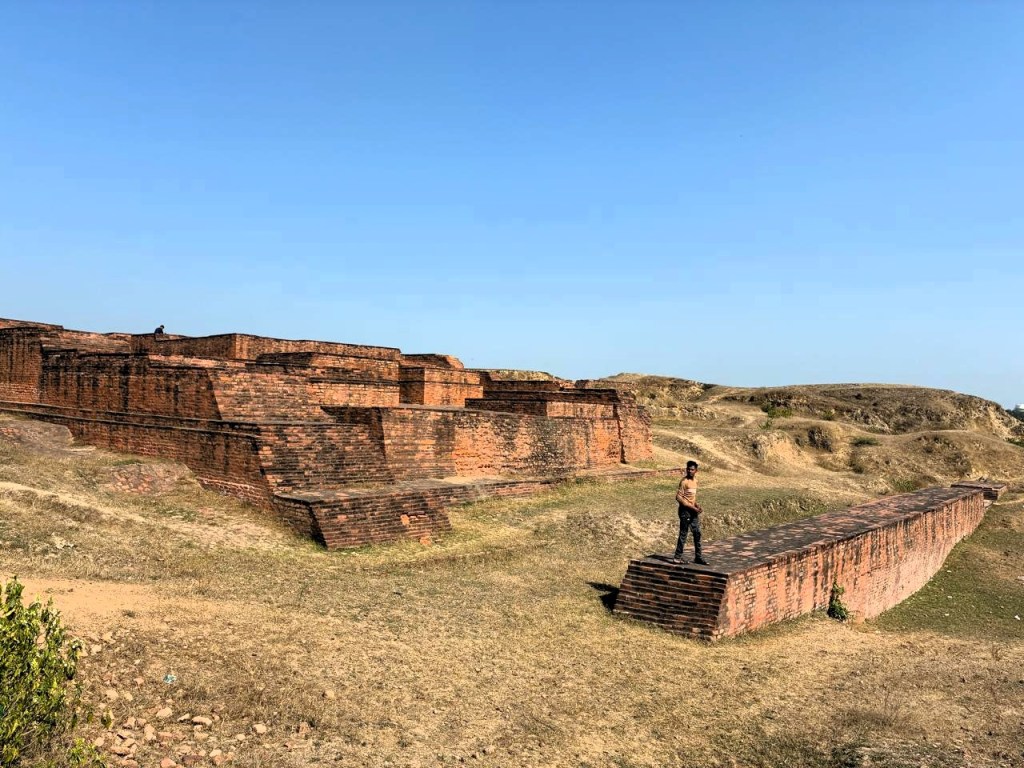
The Ghoshitaram Monastery is the retreat constructed by the banker Ghoshita. It was identified on the basis of a seal with a legend ‘Kaushambyam Ghoshitaram Vihare Bhikshu Shilakarapita’. Gautam Buddha graced this monastery when he visited Kaushambi during the 6th and 9th years of his attaining enlightenment.
The Ghoshitaram Monastery complex consists of cells for monks with a cloistered verandah, a massive stupa square on plan with double recessed corners and two subsidiary stupas. It showed 16 phases of structural activity. The earliest one dates back to the 5th century BCE.
But the Ghoshitaram Monastery was also once destroyed by the Hun king Toramana. It served as a residence for monks and a place for teaching and meditation. Its architectural grandeur and spiritual ambiance made it a revered destination for pilgrims and devotees.
We stood in the shade while Samir made an excursion to an ancient wall we could see in the distance. While the ASI is managing this site and has constructed toilets, they were not operational. Given that these sites are frequented by Buddhist pilgrims, and not so much by tourists, basic amenities should certainly be operational.
River Yamuna from the Raja Udyan Fort
Raja Udyan Fort
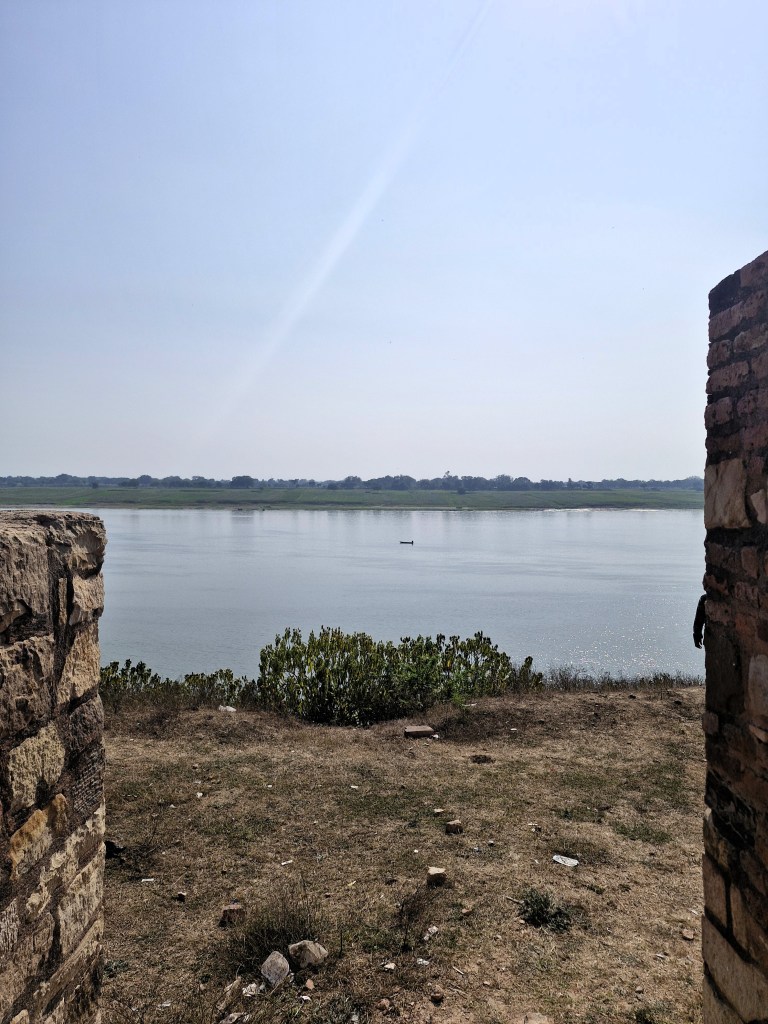
The Raja Udyan Fort is preserved by the ASI. Its ruins tell the love story of King Udyan and Princess Vasavadatta that happened 2,500 years ago, according to the Kavyakhanda. The King had a veena named Ghoshavati that played beautifully and magically.
King Pradyot of Avanti imprisoned King Udyan and made him his daughter Princess Vasavadatta’s veena teacher. The love story of the Princess and King Udayan began thus. Their romance and music by the river Yamuna made the Raja Udyan Fort famous across the land.
In today’s deserted Kaushambi, these kinds of folklore keep the air buzzing. The Raja Udyan Fort retains its massive stone walls. We could also see the remnants of rooms. Despite the Sun, I had a thrilling time here, not just because I love ruins, but also at the sight of the Yamuna.
What a strategic location!
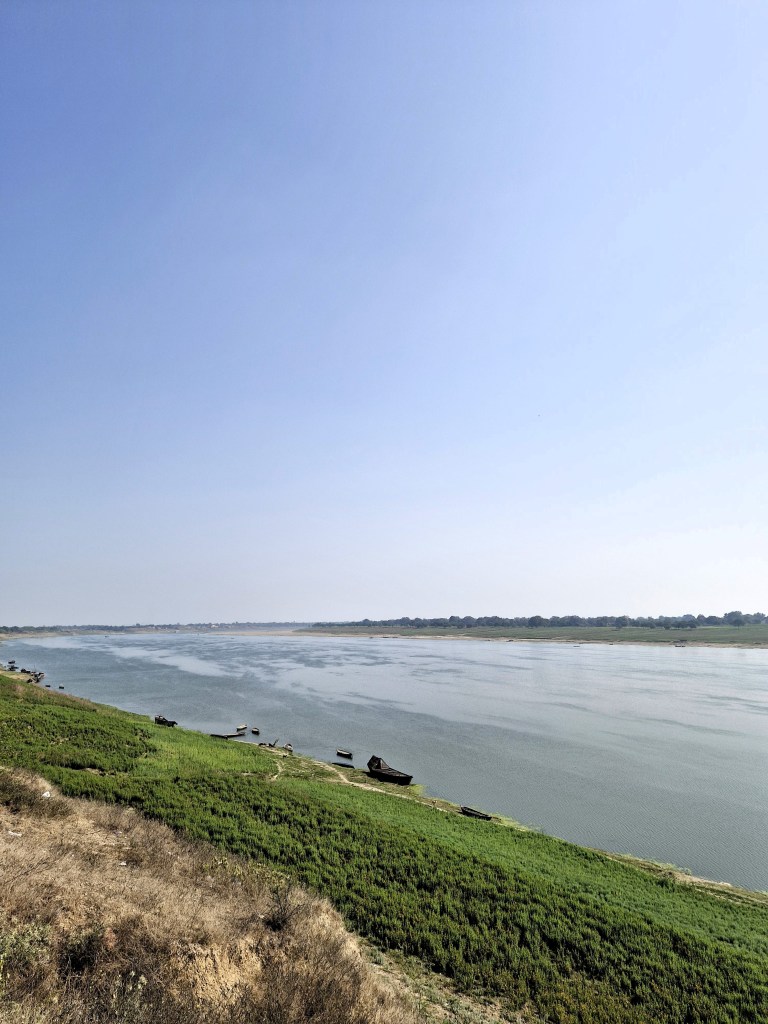
But also, the scale of the Raja Udyan Fort ruins gives an idea about how grand it would have been in its prime. Efforts have been made to preserve its glorious history but it is still a long way off before this becomes part of the tourist circuit.
After a good two hours’ drive, with a dhaba lunch halt, we arrived at Chitrakoot in the early evening hours. We made straight for our accommodation first – the Rahi Tourist Bungalow by Uttar Pradesh Tourism. We freshened up, rested, had evening tea and snacks and then headed out again.
We met our local guide Radhe bhaiya here who, over the next 48 hours, gave us an overview of the socioeconomic landscape of Bundelkhand. But first, let me give you a brief overview about Chitrakoot.
Chitrakoot
Boat ride on the River Mandakini

I have known about Chitrakoot because of its association with the Ramayana. This is the place where Ram, Sita and Lakshman spent many years of their exile. I have, therefore, been wanting to visit for a long time now. It lies in the historical Chitrakoot region, which is divided between the Indian states of Madhya Pradesh and Uttar Pradesh.
River Mandakini passes through Chitrakoot. She is a geographical feature here as well as a deity. The pilgrimage town is famous for its temples, scenic beauty, and religious significance. In addition to its mythological connections, it was a part of the larger tract of Bundelkhand where various historical dynasties reigned.
In the medieval times, Chitrakoot was conquered by the Delhi Sultanate and later by the Mughal Empire. It has a rich cultural heritage. It is known for its classical music and dance forms. Festival fairs produce dynamic social interaction, trade and performance spaces.
Chitrakoot is definitely worth visiting for anyone interested in Hindu mythology and culture. It is a destination for spiritual journeys and a revered site for devotees and travellers alike. Unfortunately, it has been a rather underdeveloped piece of land requiring better local governance.
Mandakini Aarti
I did not get a chance to explore the Chitrakoot temples or to hike up its hills this time. I hope it will call me again.
The Sail of Bliss ‘Religious Boat Ride’
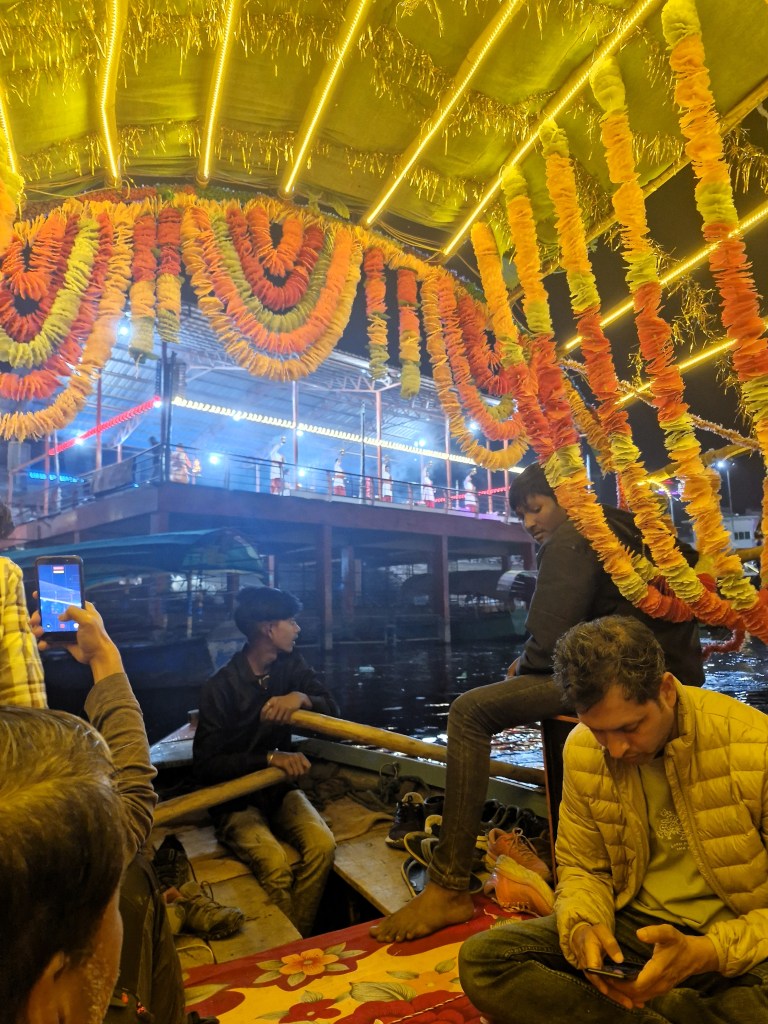
We headed to the River Mandakini ghat where we hopped onto a comfortable rowboat for a The Sail of Bliss Religious Boat Ride. Our private boat ferried us along the Mandakini on a fascinating ride. As we sailed past temples, we could see the Mandakini aarti in progress at multiple spots.
Simultaneously, a few of the boats had lively music playing with young adults and teenagers enjoying their time on them. The Sail of Bliss gave us a feel of both the religious India and the emerging India. Samir and Radhey bhaiya regaled us with historical and religious narratives.
Sail of Bliss
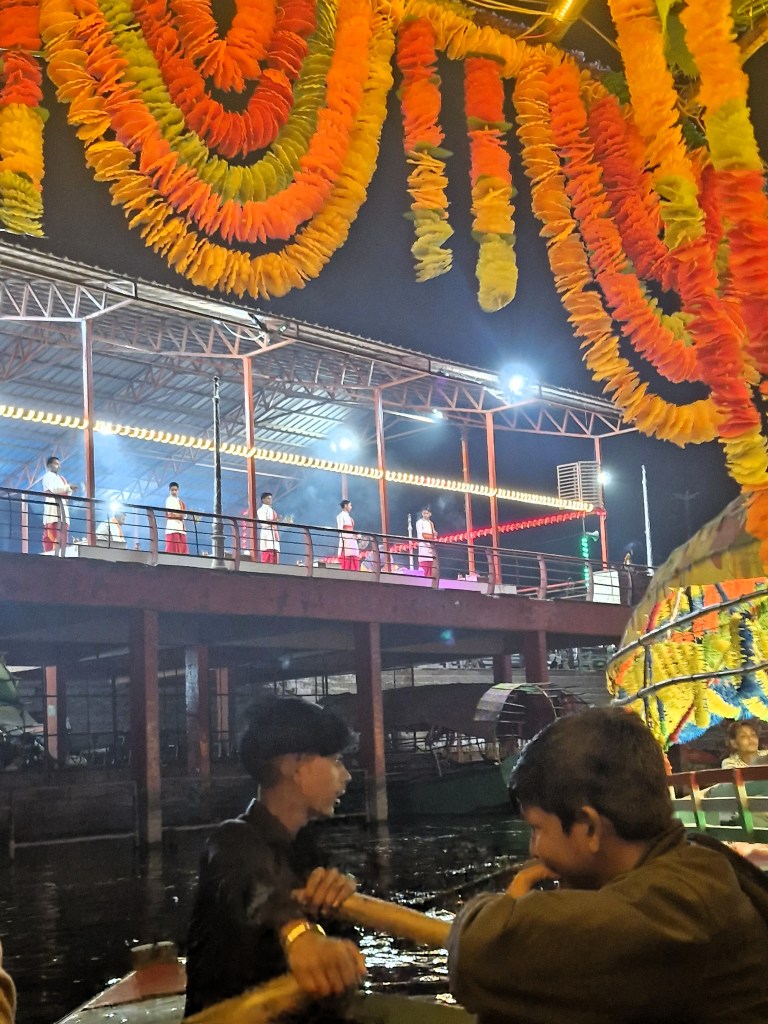
When we reached the final aarti spot, we halted for a while to participate in the divine prayers, hoping that the supreme powers will bring happiness to us. When we reached back on the riverbank, the crazily lit boats made for a perfect photo-op.
These boats were a full package – party lights, paper garlands, large speakers, soft toys, a couple of them had rabbits too. How could I not get a photo with such boats?
‘Pangat’ at Jaipuria Smriti Bhawan
We returned to the hotel briefly before walking down to the Jaipuria Smriti Bhawan next door for a ‘pangat’. The Smriti Bhawan is a budget accommodation meant for pilgrims. The guest house, from whatever I could see, had clean premises and courteous staff.
Pangat at Jaipuria Smriti Bhawan
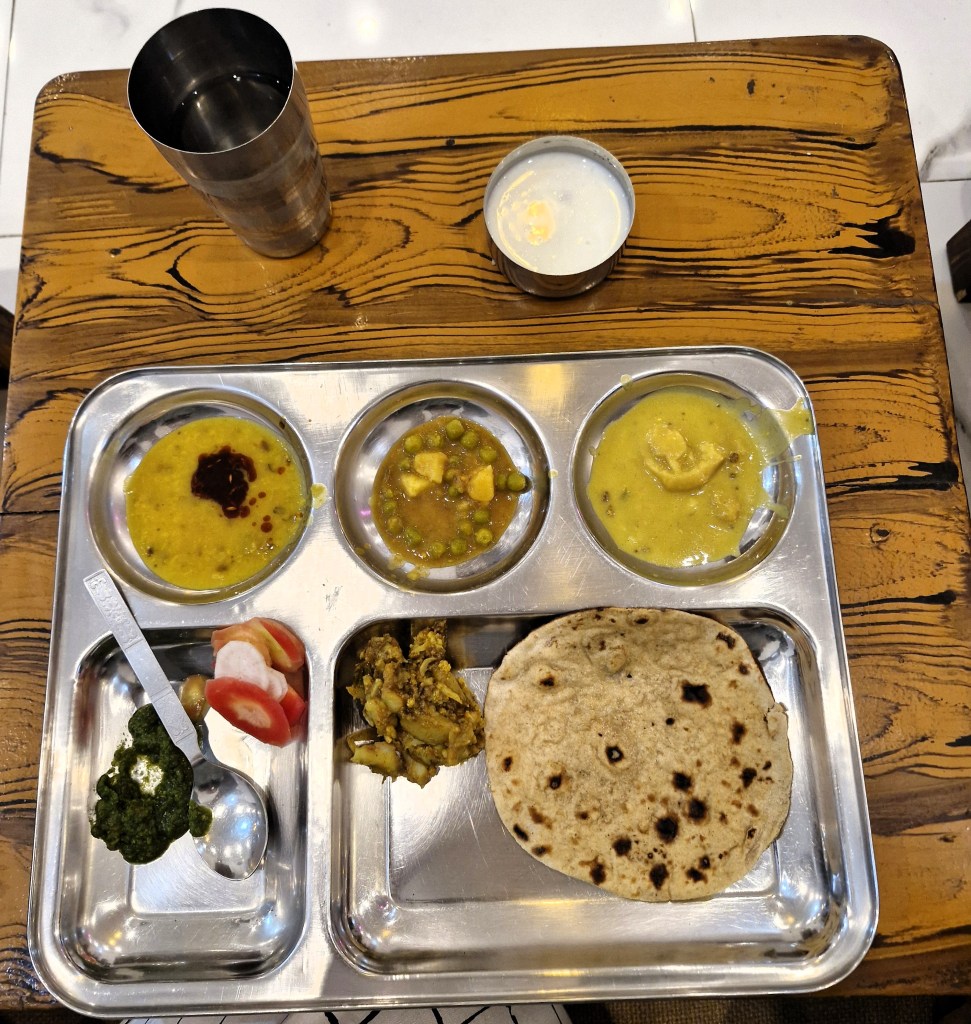
The Jaipuria Smriti Bhawan offered all modern-day amenities, including free Wi-Fi and a lift. It offered traditional Indian hospitality. The food served here was time-honoured, tasty and saatvik. Pangat is an age-old manner of eating/ serving food in a sit – down style.
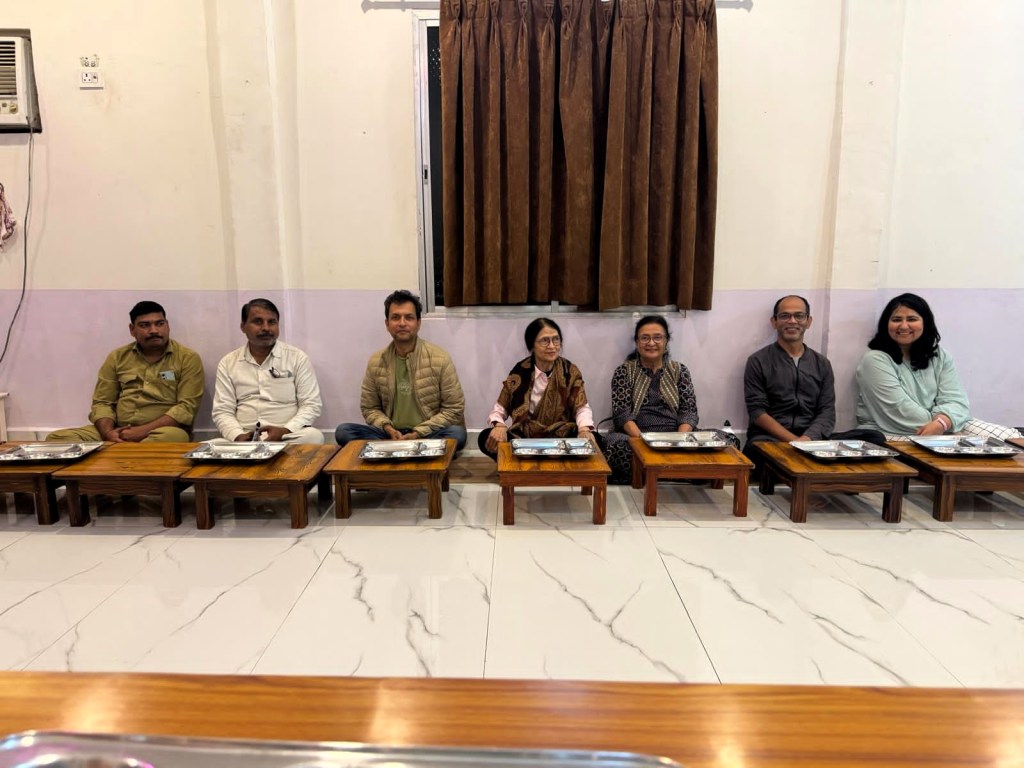
We sat down in the Jaipuria Smriti Bhawan dining hall in cross – legged manner and were served food in sectioned plates. There was buttermilk, daal with tadka, aloo matar, kadhi, coriander chutney, salad, aloo gobhi, roti and rice. Everything tasted flavoursome.
The Jaipuria Smriti Bhawan servers fed us with such warmth that it was actually difficult to say no to them for seconds. I’m sure all of us overate! For those who could not sit on the floor, there were tables and chairs available. The pangat was a delightful experience of savouring a traditional meal cooked over a woodfired oven.
Great company, great conversation, great food – what a fitting end to a great day!
The grounded ones…
What I saw in Kaushambi and Chitrakoot was definitely gratifying, but what I felt was way more important. Satisfied. Traveler. Delighted. Awed.
Stay tuned for my Day Four blog post. A once-in-a-lifetime trip I took… It has truly changed my life and me!
